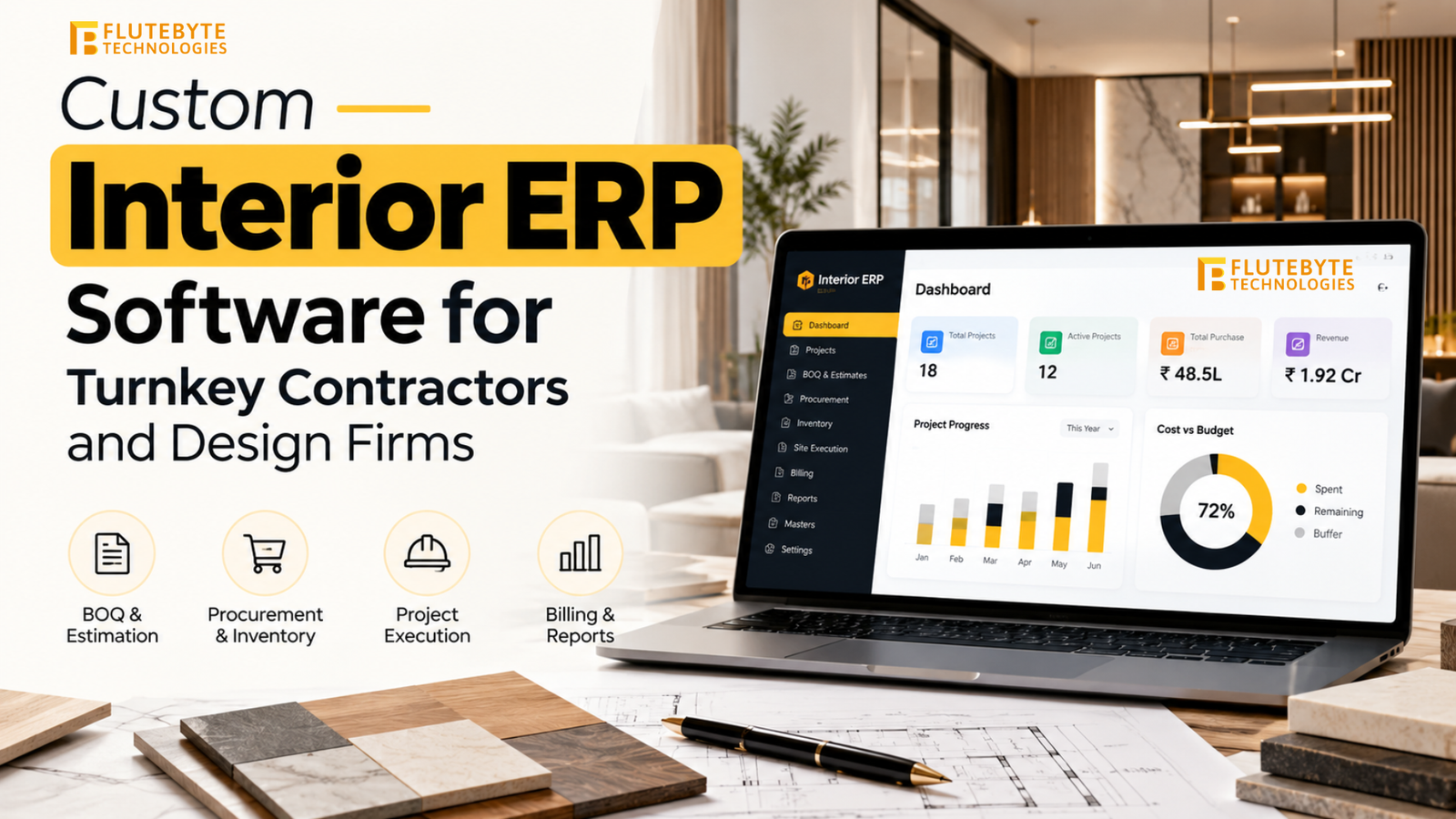
Custom interior ERP software provides an integrated business management platform that connects your customer relationship management, estimation, procurement, site execution, and milestone billing into a single project record. It replaces the chaos of manual data entry with a structured digital environment designed specifically for the unique workflows of interior contractors, modular furniture manufacturers, and design firms.
Managing an interior contracting business requires precise coordination between client approvals, material procurement, and site execution. When you rely on disconnected spreadsheets, manual estimates, and scattered chat messages, you lose visibility over project profitability and timelines. An interior fit-out company executing a ₹50 lakh commercial office project can easily lose 10% to 15% of its profit margins simply because a site supervisor ordered extra materials that nobody tracked against the original budget.
Table of Contents
What Is Custom Interior ERP Software?
Custom interior ERP software is a specialized operational platform built specifically around your firm’s internal processes. General retail or manufacturing software tracks items moving through a static warehouse. Interior contracting requires a project-based structure where everything revolves around a specific site, a unique client, and a customized set of deliverables.
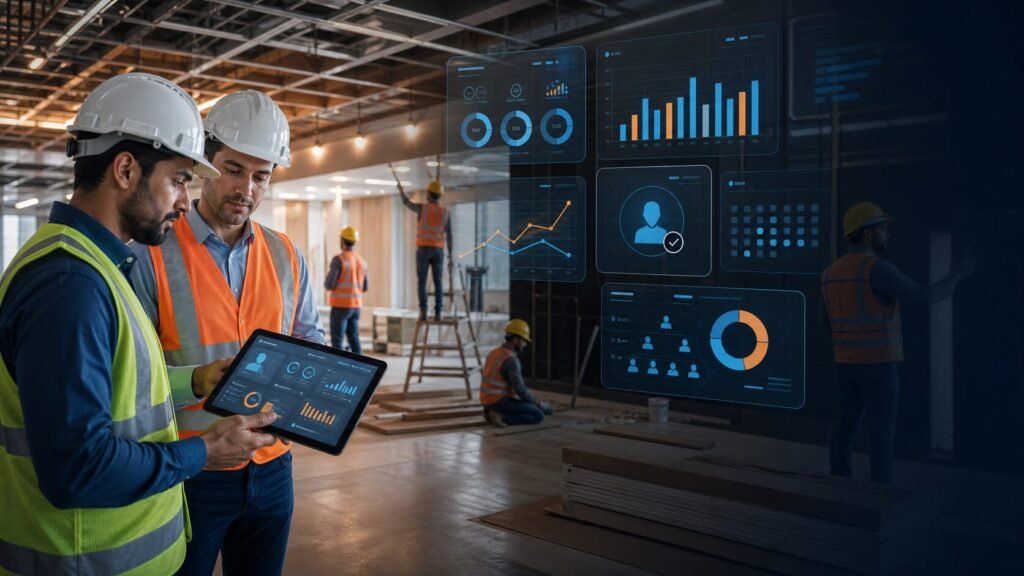
Your business creates unique products for every client. A custom ERP captures the exact specifications of a site, tracks the unique materials required for that specific design, monitors the labor deployed to that specific location, and ensures that you bill the client according to the exact milestones achieved on the ground. By customizing the software, you dictate the approval hierarchies, configure the reporting dashboards, and define the exact data access permissions for your architects, procurement officers, and site supervisors.
Core Modules of Custom Interior ERP Software
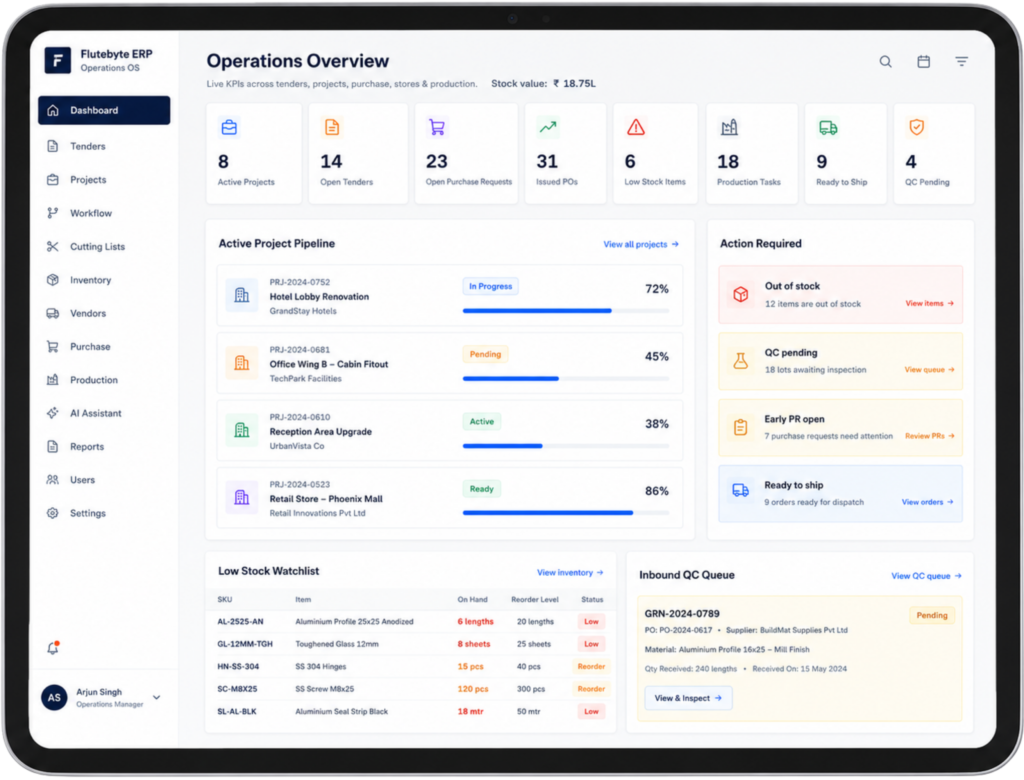
An effective interior management platform operates through five interconnected modules. These modules ensure that data flows seamlessly from the first client meeting to the final project handover.
CRM and Client Sales Management Your sales cycle requires extensive documentation before a project ever begins. The CRM module tracks client enquiries, design briefs, and communication logs. When a prospective client requests a full residential fit-out, your sales team uses the CRM to record layout preferences, budget constraints, and site measurements.
You maintain a clear record of client decisions and design revisions. If a client requests a change from ceramic tiles to Italian marble during the early discussion phase, the CRM logs this request. This prevents miscommunication when the project transitions from the sales team to the estimation department. The CRM ensures you stop losing track of early leads and provides a unified view of your entire sales pipeline.
Dynamic Interior BOQ Software and Estimation Standard accounting tools fail at interior estimation because your material costs change constantly. Dedicated Interior BOQ Software allows your estimation team to configure custom unit pricing for materials, hardware, finishes, and labor rather than relying on static price lists.
Interior estimation requires complex rate analysis. Your BOQ must calculate the cost of a custom wardrobe by factoring in the square footage of commercial plywood, the specific brand of laminates, the quantity of hinges, the edge banding tape, and the carpenter’s daily wage. If your supplier increases plywood prices by 8%, custom Interior BOQ Software allows you to update the base rate in the system. The software then automatically recalculates the entire BOQ for that specific project. This protects your profit margins before you sign a binding contract with the client.
Procurement, Vendor Coordination, and Inventory Control You need strict control over material purchasing to prevent budget overruns and site delays. The procurement module manages vendor quotations, purchase orders, and material delivery tracking.
When your site manager needs 50 sheets of laminate and 10 boxes of screws, they submit a digital requisition through the ERP. The software automatically verifies this request against the approved BOQ for that specific site. If the request exceeds the budgeted quantity, the system flags it for management approval. Once approved, the procurement team generates a purchase order and sends it directly to the authorized vendor. The ERP tracks the delivery status and records the goods receipt note when the materials arrive at the site. This strict workflow eliminates unauthorized purchases and prevents material theft.
Project Management for Interior Design and Site Execution Managing site execution requires real-time updates from your field teams. Your central office needs to know exactly what happens on site every day. The module for interior design project management software monitors task checklists, milestone progress, and labor allocation.
Your site supervisors use a mobile-friendly interface to update daily completion percentages. They upload site photos, log the number of carpenters and electricians present, and report any site delays caused by other agencies. Effective Project management for interior design requires strict dependency tracking. You cannot start the painting process until the electrical piping and gypsum ceiling work finish. The ERP tracks these dependencies and alerts your project managers if a delay in one task threatens the final delivery deadline.
Financial Management, Milestone Billing, and Profitability Cash flow dictates your business survival. The financial module controls milestone billing, tax compliance, and real-time profitability visibility.
Interior projects rely on milestone-based payment schedules. When your site supervisor marks the civil work as 100% complete, the ERP automatically triggers an alert to your finance team to generate the next invoice. The system handles all GST compliance and tracks vendor payment retention money. You gain real-time visibility into project profitability. The dashboard shows you exactly how much money you have spent on materials and labor versus the total amount billed to the client at any given moment.
Evaluating Market Alternatives

When researching options, buyers evaluate various software platforms. You will find that off-the-shelf products often force you to compromise on your operational requirements.
Many firms look at SaaS for interior designers. These platforms typically offer sleek client presentation tools and basic invoicing. However, SaaS for interior designers often forces you to adapt your established business processes to fit their rigid, predefined templates. They lack the deep procurement and complex rate analysis features required by large turnkey contractors.
You might also evaluate generic interior design business software. These tools handle basic task assignments and calendar management. Yet, generic interior design business software breaks down when you need to manage multiple vendors, track partial material deliveries, or handle complex inter-state tax calculations.
Some firms read design manager software reviews to understand legacy accounting tools. Legacy platforms deliver reliable financial management, but design manager software reviews consistently point out that their reporting is limited and workflows cannot easily be adjusted to match how modern firms actually operate.
You may also come across heavy construction systems like Kanix Infotech. While systems like Kanix Infotech offer robust features for massive civil engineering projects, they include heavy structural and land management modules that interior contractors never use. This makes them cumbersome to implement, expensive to maintain, and difficult for your interior design staff to learn.
Custom software built specifically for your operations ensures you only pay for the features you actually need, and the system adapts to your exact approval hierarchies.
Key Differences: Off-the-Shelf vs Custom Built
| Feature | Custom Interior ERP | Generic Off-the-Shelf Software |
| BOQ Configuration | Complex rate analysis with dynamic material updates | Simple item lists with static pricing |
| Approval Workflows | Customized to your specific management hierarchy | Rigid, predefined vendor structures |
| Site Requisitions | Automated checks against original site budgets | Manual tracking and disjointed requests |
| Vendor Management | Tracks retention money and partial deliveries | Basic purchase order generation |
| User Interface | Designed around your specific team roles | Cluttered with unnecessary industry features |
| Scalability | Unlimited users without per-seat licenses | Expensive per-user monthly subscription fees |
Financial Impact and Measurable ROI for Contractors
Investing in custom software requires upfront capital, but the operational savings generate a rapid return on investment. Consider a mid-sized interior contracting firm executing ₹10 crore in annual projects.
Material Wastage Reduction
Without centralized tracking, site supervisors over-order materials to avoid stockouts, leading to high wastage. A custom ERP enforces strict BOQ limits. Reducing your material wastage from 8% to 3% on a ₹10 crore turnover saves you ₹25 lakhs directly to your bottom line.
Accelerated Billing Cycles
Manual billing processes often delay invoices by weeks because the finance team must gather physical measurement sheets from site supervisors. An ERP automates this process based on real-time site updates. Accelerating your billing cycle by just 15 days significantly improves your working capital position and reduces your reliance on expensive bank overdrafts.
Labor Productivity Gains
Your project managers spend hours every week compiling spreadsheet reports, cross-checking vendor invoices, and tracking down site updates. Automating these administrative tasks frees up your management team to oversee more active sites simultaneously. A team that previously managed four sites can effectively manage six sites without adding new project management headcount.
Preventing Under-Pricing
By using accurate, real-time material costs in your estimation module, you stop signing contracts based on outdated supplier prices. Protecting a 2% margin erosion on total revenue secures an additional ₹20 lakhs in profit annually.
Why Choose Flutebyte Technologies Pvt. Ltd.
At Flutebyte Technologies Pvt. Ltd., we engineer custom interior ERP software around your actual workflows, departments, users, and operational requirements. We understand that a turnkey commercial fit-out contractor manages projects very differently than a specialized residential modular furniture manufacturer.
We do not force you to use generic templates. Our team analyzes how your specific purchasing department negotiates with vendors, how your estimation team builds their rate analysis, and how your site managers report daily progress. We then develop the software architecture to support and accelerate those specific processes.
Flutebyte Technologies Pvt. Ltd. builds robust, secure, and scalable web applications. We provide your management team with accurate, real-time reports on project costs and profitability. By partnering with us, you gain complete ownership of a digital platform that eliminates manual data entry, prevents material leakage, and gives you total control over your interior contracting business.
Frequently Asked Questions (FAQs)
1. What is custom interior ERP software?
Custom interior ERP software is a specialized business management platform built specifically for interior contractors and design firms. It manages your sales, complex BOQ estimation, material procurement, daily site execution, and milestone billing in one unified digital system.
2. How does an interior ERP handle BOQ estimation?
The software allows your estimation team to build dynamic Bill of Quantities using custom unit pricing for raw materials, hardware, finishes, and daily labor rates. It links these specific estimates directly to your procurement and project tracking modules to prevent budget overruns.
3. Is custom software better than standard SaaS for interior designers?
Yes. Custom software is built around your specific business processes, approval hierarchies, and site workflows. Standard SaaS products often force you to change your established operations to fit their predefined templates and usually lack the deep procurement features required by contractors.
4. Can the software track site progress in real time?
Yes. Site managers use mobile-friendly interfaces to update daily task completion percentages, upload site photos, log labor attendance, and submit material requirements directly from the project site. This data instantly updates the central office dashboard.
5. Does the ERP manage vendor payments and taxes?
Yes. The financial module tracks all vendor invoices against your approved purchase orders. It manages vendor payment schedules, tracks retention money, and ensures full GST and tax compliance for your business operations.
6. Will this software integrate with our existing tools?
Flutebyte Technologies Pvt. Ltd. builds custom ERP systems with secure REST APIs. This allows seamless data integration with your existing accounting software, CRM platforms, or marketing tools, ensuring you do not have to abandon systems that currently work well for your accounting team.
7. How long does it take to implement a custom interior ERP?
Implementation timelines depend on your specific operational complexity. We follow a structured process of workflow analysis, core development, rigorous testing, and phased deployment. A standard custom system typically takes 12 to 16 weeks to build, test, and deploy to your team.